Dangote Refinery Increases Fuel To N1,245 per Litre Price As Iran War Drives Oil Surge
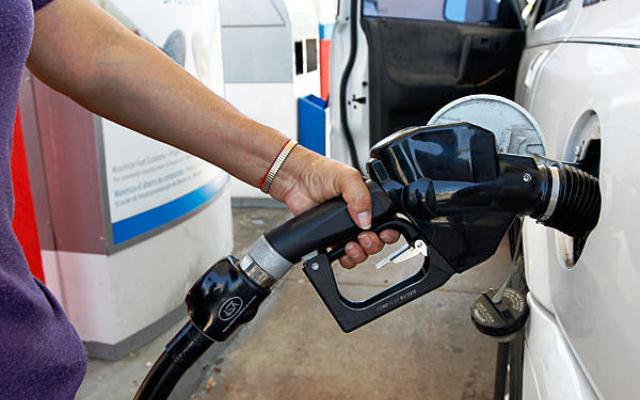
Dangote Petroleum Refinery has announced a fresh increase in the price of Premium Motor Spirit (PMS) from N1,175 to N1,245 per litre, following the Middle East crisis, which has sent crude oil prices rising above $100 per barrel.
In a notice to marketers on Friday, the Refinery noted that its ex-depot (gantry) price would rise from N1,175 to N1,245 per litre, while the coastal price increased from N1,512,648 to N1,606,518 per metric tonne.
The notice explained that the revision reflects global market realities, including fluctuations in crude oil prices and increased shipping costs, which are beyond the Refinery’s control.
The new pricing is set to take effect from midnight on Saturday, March 21, 2026.
Marketers with existing supply arrangements backed by valid bank guarantees will still be allowed to lift products at previous rates, provided their guarantees cover the price differential.
The Refinery stated that the corresponding cost difference will be debited to marketers’ trading accounts, with evidence of payment required by March 23.
Following the notice to marketers, the Refinery, in a statement to newsmen, same Friday, noted that Nigeria has retained one of the lowest petrol prices globally despite recent increases driven by geopolitical tensions in the Middle East.
“According to GlobalPetrolPrices.com, petrol in Nigeria currently averages $0.88 (N1,191.39) per litre, significantly below the global average of $1.32 (N1,787.08) per litre, based on an exchange rate of N1,353.85 to the dollar. This places Nigeria among the more affordable fuel markets globally, even as international prices continue to rise.
“Across key markets, petrol prices are notably higher, with the United States at $1.075 (N1,455.39), India at $1.095 (N1,482.47), and South Africa at $1.189 (N1,609.73) per litre. Prices rise further in advanced economies, including the United Kingdom at $1.874 (N2,537.11), France at $2.152 (N2,913.49), and Germany at $2.343 (N3,172.07), while Hong Kong records as high as $3.967 (N5,370.72) per litre.
“Nigeria also compares favourably within the West African region, where petrol prices are higher in Togo at $1.192 (N1,613.79), Benin at $1.218 (N1,648.99), Ghana at $1.240 (N1,678.77), and Cameroon at $1.478 (N2,000.99) per litre.
“Analysts attribute this relative stability to the growing impact of Dangote Petroleum Refinery & Petrochemicals, which has helped moderate domestic price volatility by absorbing a significant portion of the global cost pressures while ensuring consistent product availability. This intervention has become particularly critical as many countries face supply disruptions, rationing, and sharp price spikes following the escalation of tensions in the Middle East.
READ ALSO: Iran War: Oil Marketers Hails Dangote As ‘Savior’ Amid Fuel Hike
“A key insight from the data is that very few countries globally sell petrol below $1 (N1,353.85) per litre without some form of state intervention”, the Refinery noted, explaining the reason for its recent increase.
Dangote Refinery
Despite Nigeria’s transition to a deregulated market following subsidy removal in 2023, Dangote Refinery maintained that it has continued to act as a buffer for the economy.
“While domestic petrol prices have risen by about 35 to 40 per cent since the onset of the crisis, this increase remains lower than in several other markets, with countries such as Cambodia and Vietnam recording hikes of over 67% and 49% respectively”, the statement added.
The development marks the fourth fuel price hike by the Refinery in March. Earlier this month, PMS was increased from around N774 to N875, then N995, N1,175, and now N1,245 per litre.
Threats to the Strait of Hormuz and the Iran-US-Israel conflict have caused Nigerian crude to surge above $110 per barrel.
Brent reached its highest point since mid-2022 at $112 per barrel by week’s end.
This is significantly higher than Nigeria’s $64.85 budget benchmark.
Brent crude prices have risen over 50% this month, and Middle Eastern oil such as Abu Dhabi’s Murban grade has doubled in value.
The global benchmark of Brent has increased nearly 50% this month as the third week of the conflict approaches.
Meanwhile, Trump has attempted to de-escalate attacks on natural gas and oil resources, again criticizing NATO allies for refusing to join the war effort against Iran or help clear the strait through which 20% of the world’s oil passes.
About The Author