
Deregistration Order: Atiku, ADC, 4 Other Parties Fume Over Verdict, Vow To Be On Ballot

Leaders of African Democratic Congress, ADC; and Accord, yesterday picked holes in the ruling of a Federal High Court ordering the Independent National Electoral Commission, INEC, to de-register their parties and four other parties.
While ADC said the All Progressives Congress, APC-led Federal Government is playing with fire over alleged de-registration plot, its National Chairman, Senator David Mark, said the opposition party will be on the ballot in 2027, despite the verdict.
Also, Governor Ademola Adeleke of Osun State, the sole governor of Accord Party in the country said the judgment violated a Court of Appeal order.
This was as presidential candidate of African Action Congress, AAC, Omoyele Sowore, described the development as undemocratic and inconsistent with the principles of multi-party democracy.
Why court ordered INEC to deregister ADC, Accord, 3 others
The other parties the Abuja Federal High Court directed the electoral body to de-register are Action Peoples Party, APP; Action Alliance, AA; Accord; and Zenith Labour Party, ZLP.
The order followed a judgment delivered by Justice Peter Lifu.
According to the court, the five political parties including the ADC failed to meet the constitutional requirements to warrant their continued existence and participation in future elections.
It barred INEC from further according recognition to the parties, accepting nominations of their candidates, or giving effect to their activities for the purpose of participating in the 2027 general elections.
Moreover, Justice Lifu ordered the defendants, to stop parading themselves as registered political parties in the country, and held that there is merit in a suit filed against them by the National Forum of Former Legislators, NFFL.
The group, in the suit marked FHC/ABJ/CS/2637/2026, prayed the court to determine whether INEC has a constitutional obligation to remove political parties that fail to meet the electoral performance thresholds set out in Section 225A of the 1999 Constitution (as amended), as reinforced by the Electoral Act 2022 and INEC’s regulations.
It was the position of the plaintiff that the five political parties listed as defendants in the matter had persistently failed to meet the constitutional benchmarks required to retain their registration.
The former legislators stressed that the requirements include winning at least 25 per cent of votes in a state during a presidential election or securing at least one elective seat at the national, state, or local government level.
They told the court that the ADC and the four other parties performed poorly in both the 2023 general elections and by-elections conducted by INEC, thereby failing to win seats across key tiers of government.
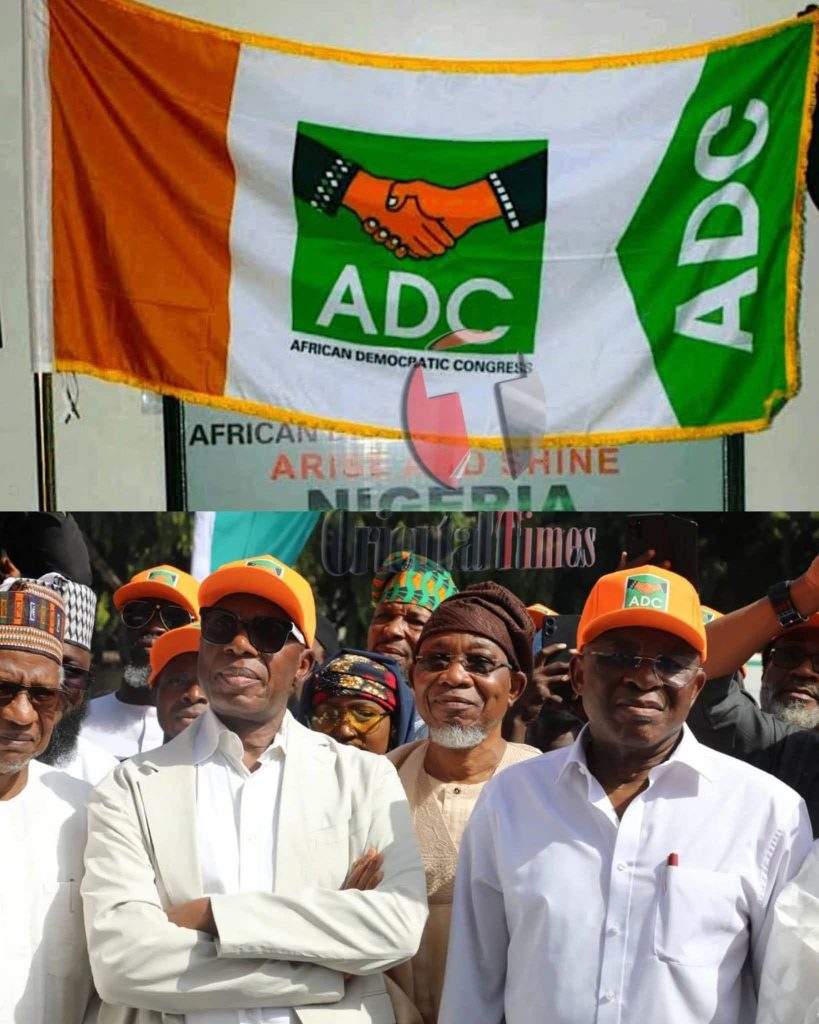
The litigants insisted that the continued existence of the ADC and other defendants as recognised political parties is unlawful and undermines the integrity of the country’s electoral system.
Reliefs
Among other reliefs, the plaintiff urged the court to declare that INEC is duty-bound to deregister such parties.
It further urged the court to compel the Commission to de-register the five political parties before preparations for the 2027 elections advance further.
Beyond declaratory reliefs, the plaintiff prayed the court to restrain the five affected parties from participating in general elections or engaging in political activities such as campaigns, rallies, and primaries.
It also sought a court injunction restraining INEC from recognising or dealing with the parties in any official capacity unless and until they strictly comply with constitutional provisions.
AGF’s backing
Remarkably, the Attorney General of the Federation and Minister of Justice, Prince Lateef Fagbemi, SAN, who is also a defendant in the matter, threw his weight behind the plaintiff.
In processes filed before the court, the AGF argued that the continued existence of the said political parties violated extant provisions of the 1999 Constitution (as amended) and ultimately undermined the nation’s electoral integrity.
According to him, unless the court intervenes, INEC will continue to act in breach of its constitutional duty by retaining parties that had failed to meet the minimum requirements prescribed by law.
The AGF, in an affidavit filed through a team of lawyers led by Prof. Joshua Olatoke, SAN, maintained that as the chief law officer of the federation, he was duty-bound to defend and uphold the constitution, including ensuring compliance with the Electoral Act and other laws governing elections in the country.
“The 1st Defendant has no residual discretion to retain the registration of political parties that have clearly failed to satisfy the minimum threshold prescribed under Section 225A of the Constitution.
“The continued existence of non-performing political parties will inflate the ballots, burden public funds, complicate election administration, and undermine the constitutional intention behind Section 225A of the 1999 Constitution of the Federal Republic of Nigeria (as amended).
READ ALSO: Amaechi Cries Foul Over ADC Primaries, Alleges Widespread Disenfranchisement
“Any failure or refusal of the 1st Defendant to deregister the 3rd to 7th Defendants as political parties constitutes a continuing breach of constitutional duty, capable of being challenged by way of public interest litigation.
“Unless this Honourable Court intervenes, the 1st Defendant (INEC) will continue to act in breach of its constitutional duty to deregister the 3rd to 7th Defendants — parties that have failed to meet the constitutional threshold — as the right to associate as a political party under the Constitution is not absolute,” the AGF added.
Consequently, he urged the court to grant all the reliefs contained in the suit, insisting that doing so would be in the interest of justice.
You’re playing with fire, ADC warns FG
In a response to the ruling, the ADC warned the Federal Government and the APC that they were ‘playing with fire’ by backing what it described as efforts to de-register the party through the courts, saying such a move could trigger a political crisis ahead of the 2027 general election.
The party said the issue had gone beyond its registration status and now raised broader questions about whether Nigerians would have a genuine opposition choice on the ballot in 2027. It argued that any attempt to remove the ADC from the electoral contest would amount to an attack on democracy and political pluralism.
The position was contained in a statement by the party’s National Publicity Secretary, Mallam Bolaji Abdullahi.
“We wish to warn, in the strongest possible terms, against any attempt to use the judiciary as an instrument to undermine democracy and plunge Nigeria into a major political crisis,” Abdullahi said.
Rejecting the judgment, the ADC maintained that only INEC had the constitutional authority to register or de-register political parties, noting that INEC had informed the court that there was no legal basis for its de-registration.
“The facts are straightforward. The plaintiffs had argued that the ADC and four other political parties failed to satisfy constitutional requirements relating to continued registration. However, in its counter-affidavit filed before the court in May, INEC categorically maintained that the ADC had not violated any registration requirements,” the party stated.
It also accused Justice Peter Lifu of proceeding with the matter, despite a subsisting Court of Appeal order directing a stay of proceedings and announced plans to petition the National Judicial Council, NJC, over what it described as the judge’s conduct.
Beyond the legal dispute, the ADC alleged that individuals linked to the Presidency had championed the case and questioned the involvement of the Attorney-General of the Federation and Minister of Justice in the matter.
“Our position is anchored on the role that agents of the ruling party have played in this matter. It would be recalled that the case has been championed directly by individuals working with the President’s Chief of Staff,” the statement added.
The opposition party also questioned the timing of the judgment, saying, its “coming at a time the party has concluded its primaries and is fielding candidates for all positions in the next election, especially the presidential election, it is clear what this is all about.”
About The Author