Xi Holds Back-to-Back Calls With Putin, Trump as Nuclear Pact Expires
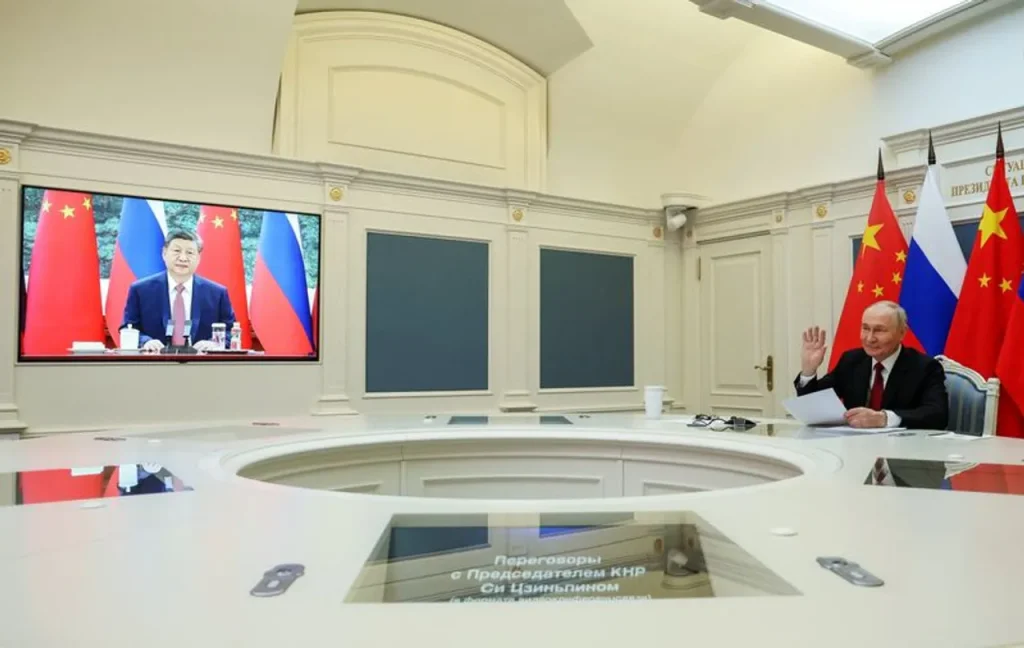
Chinese President Xi Jinping engaged in a diplomatic double-header on Wednesday, holding a video conference with Russian President Vladimir Putin before speaking by phone with U.S. President Donald Trump, as the last remaining nuclear arms control agreement between Washington and Moscow is set to expire on Thursday.
The conversations came one day before the New Strategic Arms Reduction Treaty (New START) lapses, potentially marking the first time since the early 1970s that U.S. and Russian strategic nuclear forces will operate without legally binding constraints.
In their video call, Putin praised the Moscow-Beijing relationship as “an important stabilizing factor” in a time of “growing turbulence in the world,” according to remarks broadcast on Russian state television. Xi, through an interpreter, urged the two nations to devise a “grand plan” aimed at enhancing their bilateral relations, which he noted were progressing positively.
The Kremlin announced that Putin accepted Xi’s invitation to visit China in the first half of 2026, continuing a tradition of high-level video conferences maintained since 2020.
READ ALSO: Trump Issues Dire Warning of Severe Fallout if Putin Blocks Ukraine Peace 2
Putin highlighted cooperation in the energy sector as “truly strategic,” noting that bilateral trade had reached approximately $220 billion in 2025.
China urged Washington on Tuesday to “respond positively” to Russia’s offer to maintain nuclear warhead limits while refusing to join trilateral nuclear disarmament negotiations, citing the disparity in nuclear stockpile sizes.
Trump has insisted on pursuing a “better” agreement that would include China, though Beijing has consistently rejected this approach.
The Xi-Trump phone conversation was their first since late November, when the two leaders agreed on reciprocal state visits for 2026, with Trump scheduled to travel to Beijing in April. Chinese state media did not immediately disclose details of Wednesday’s discussion.
The calls occurred against a backdrop of heightened global tensions, including a second round of U.S.-brokered peace talks between Ukraine and Russia beginning Wednesday in Abu Dhabi, continued standoff with Iran following the U.S. shootdown of an Iranian drone near the USS Abraham Lincoln, and the January capture of Venezuelan President Nicolás Maduro by U.S. forces.
About The Author