Lagos Tailor’s Fire Tragedy: 1 Spark, 1 Night, Zero Possessions
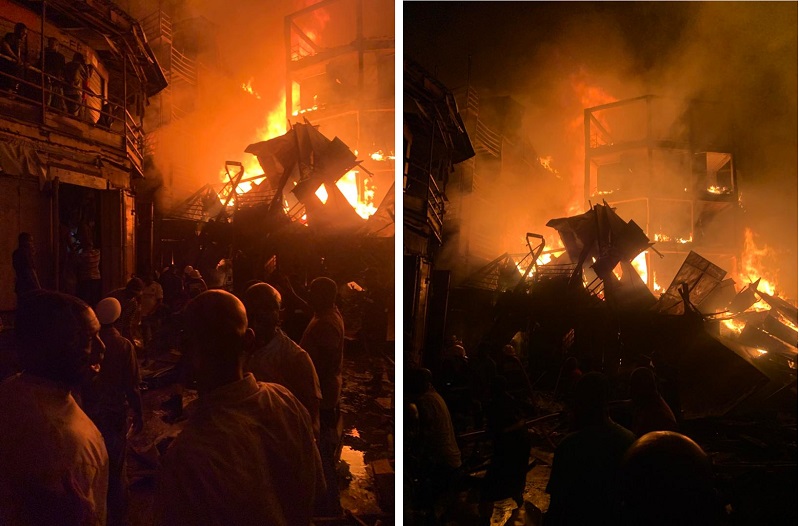
Illegal electricity connections continue to pose a serious safety risk in many Nigerian communities, often turning homes into fire hazards without warning.
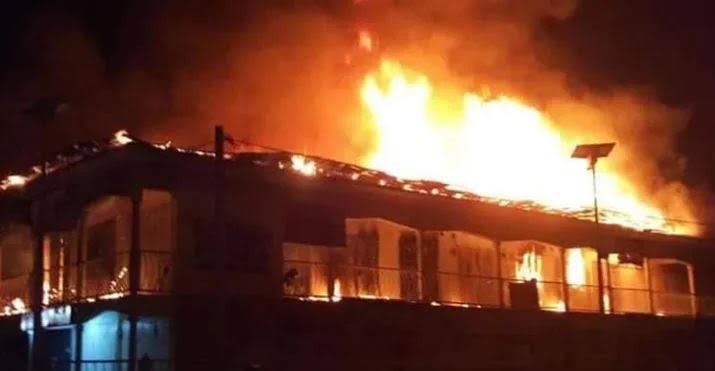
That danger became a harsh reality for Aisha Bello, a 34-year-old tailor living in Ajegunle, Lagos, whose home and livelihood were destroyed in a late-night fire caused by a faulty power connection.
Bello told Fact Frontier over a phone interview that the incident occurred shortly after midnight when electricity was restored in the area.
She said she woke up at about 2:17 a.m. after inhaling smoke from the fire, initially mistaking it for heat or another power outage.
“I started coughing and then I smelled smoke — thick, sharp smoke,” she said. “When I looked towards the sitting room, the curtains were already on fire.”
According to her, residents later traced the fire to a faulty cable linked to an illegal electricity connection common in the neighborhood.
“When power came back, the wire sparked,” Bello said. “Many houses here use makeshift wiring. We know it’s dangerous, but people don’t really have options.”
She said she had only seconds to react.
“I froze at first, then fear took over,” she said. “I grabbed my phone and ran outside barefoot. I didn’t think of my clothes, documents, or money. I just wanted to live.”
Within minutes, the fire consumed her one-room apartment.
“Everything burned very fast,” she said. “I stood outside watching my life disappear. I couldn’t scream or cry. I was just numb.”
Bello said she lost all her belongings, including her savings, household items, and her sewing machine, which she was still paying for.
READ ALSO: Army Probes Officer’s Death After Fire Incident in Akwa Ibom
She also lost dresses she had just completed for a customer’s wedding, dealing a major blow to her only source of income.
Tailoring, she explained, had been her means of survival since she moved to Lagos from Kwara State seven years ago.
“It was my pride,” she said. “People trusted me with their clothes. That work gave me dignity.”
The morning after the fire, Bello said the full impact of the loss became clear.
“When the sun came out and I saw the ashes, the collapsed zinc, and the smoke everywhere, reality hit me,” she said. “I had no house, no job, no money.”
Beyond the physical damage, Bello said she also lost vital personal documents, including her birth certificate, WAEC result, and National Identification slip.
“Those papers are your life in Nigeria,” she said. “Replacing them costs money I don’t have. It felt like my identity burned too.”
She spent the night on a neighbour’s floor after residents offered her basic assistance.
“Someone gave me slippers, another person gave me a wrapper,” she said. “I was grateful, but I couldn’t sleep. Every time I closed my eyes, I saw flames.”
Bello said no official assistance came after the incident, but support from community members helped her begin to recover.
“A woman I barely knew started a small WhatsApp fundraiser. A pastor gave me used clothes. Another tailor offered me space in his shop when I was ready to work again,” she said.
Weeks after the incident, Bello said she is slowly rebuilding her life.
She currently shares a small room, works with borrowed tools, and still feels anxious whenever electricity is restored at night.
“I’m sewing again, slowly,” she said.
Bello’s experience underscores a danger that remains widespread but often ignored across many Nigerian communities, where illegal electricity connections are seen as a necessity rather than a risk.
For residents living on the edge, safety is frequently sacrificed for access to power — until a single spark changes everything.
Bello’s story is a warning many will recognise, and one that authorities and communities alike can no longer afford to overlook.
About The Author