
56 Days of Horror: Inside the Oyo School Kidnap That Shook the South-West

The abduction of pupils and teachers from schools in Oriire Local Government Area of Oyo State on May 15, 2026, marked one of the most significant school kidnappings ever recorded in Nigeria’s South-West.
Long regarded as relatively insulated from the mass school abductions that have plagued northern Nigeria, Oyo State suddenly found itself at the centre of a national security emergency.
The victims—39 pupils and seven teachers abducted from three schools—spent 56 days in captivity before regaining their freedom on Friday, July 10, 2026. Their release ended nearly two months of anxiety for families, protests by teachers, nationwide advocacy campaigns and intensified security operations.
The Attack: May 15
The crisis began on the morning of May 15 when heavily armed gunmen invaded communities in the Yawota/Esiele axis of Oriire Local Government Area, Oyo State.
The attackers simultaneously struck three schools, overwhelming the communities and abducting 39 schoolchildren alongside seven teachers. Witnesses said the gunmen operated in a coordinated manner, forcing the victims into the surrounding forests before security forces could intervene.
The incident immediately shattered assumptions that the South-West was largely immune to the kind of mass school kidnappings that had become common in states such as Kaduna, Zamfara and Niger.
A Brutal Escalation
Any hopes for a quick resolution suffered a devastating blow just three days later.
On May 18, kidnappers reportedly beheaded one of the abducted teachers, signalling that negotiations and rescue efforts faced enormous risks. President Bola Tinubu condemned the killing and ordered security agencies to intensify efforts to secure the release of the remaining captives.
The execution heightened public fear and reinforced concerns that school kidnappings had entered a more violent phase in southern Nigeria.
Government Response
The Federal Government and Oyo State authorities responded with a combination of military operations, intelligence gathering and community engagement.
Among the notable developments:
- Inspector-General of Police Olatunji Disu visited the affected communities on May 17.
- Governor Seyi Makinde later visited Oriire to reassure residents.
- A Federal Government delegation also travelled to the area to coordinate rescue efforts.
- Security agencies maintained that operations were ongoing but disclosed little publicly, citing operational reasons.
Throughout the crisis, officials repeatedly appealed for patience while avoiding detailed updates that could compromise rescue operations.
READ ALSO: VIDEO: ‘Thank You, Mr President,’ Freed Oyo Pupils, Teachers Express Gratitude
Public Anger and Teachers’ Strike
As weeks passed without progress, frustration grew.
The Nigeria Union of Teachers (NUT) in Oyo State embarked on an industrial action, arguing that teachers could not safely return to classrooms while their colleagues remained in captivity.
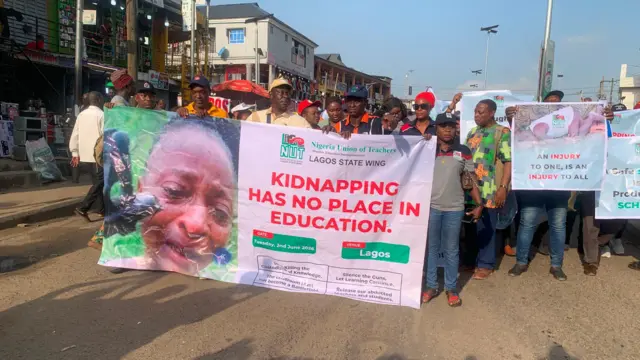
The strike significantly disrupted public education in the state and underscored growing concerns about school safety.
Civil society organisations, parents and religious leaders also organised prayer sessions and demonstrations demanding urgent government action.
Social media campaigns calling for the victims’ release gained national attention.
The Campaign Goes Global
The abduction attracted international attention in June.
Afrobeats star Davido used the FIFA World Cup Countdown Concert in Los Angeles to draw attention to the missing pupils and teachers in Oyo, wearing a jacket bearing the names of the abductees alongside the message “Bring Them Home.”
Similarly Nollywood actors and content creators also took to their social media pages to express their frustrations and calling for the release of the kidnapped victims.
The gesture helped amplify international awareness of the crisis and echoed previous global campaigns such as #BringBackOurGirls following the Chibok abductions.
Confusion During the Crisis
Several reports claiming the captives had been released circulated in June.
However, the Nigeria Police Force dismissed those reports as false, urging the public to rely only on official information.
The misinformation reflected both the high public interest in the case and the limited flow of verified updates during the rescue effort.
Freedom After 56 Days
On Friday, July 10, the ordeal finally ended.
The Special Adviser to President Bola Tinubu on Information and Strategy, Bayo Onanuga, announced that all the pupils and teachers kidnapped in Oriire, Oyo State, had been rescued by security agencies, ending a 56-day ordeal that gripped the nation.
Onanuga disclosed this in a post on his X handle, saying, “Finally, all the kidnapped pupils and teachers in Orire, Oyo have been rescued by our security agencies.”
He later revealed that eight suspected kidnappers were arrested during the operation and are currently in the custody of the Department of State Services, while several others were neutralised.
He also dismissed reports that the Oyo victims were freed through a prisoner exchange, stating that there was “no quid pro quo” because one of the terrorist kingpins whose release had been demanded by the kidnappers remains on trial for alleged terrorism-related offences.
The Oyo pupils and teachers regained their freedom after spending 56 days in captivity.
Authorities have not immediately disclosed full operational details surrounding the release, including whether it resulted from rescue operations, negotiations or another arrangement.
Their release nevertheless brought relief to families and communities that had endured nearly two months of uncertainty.
The Bigger Picture
The Oriire abduction fits into a disturbing national pattern of attacks on educational institutions that began with the Chibok schoolgirls’ kidnapping in 2014 and has since expanded across several regions of Nigeria.
Security experts increasingly warn that school kidnappings have evolved beyond isolated criminal acts into a broader national security challenge capable of disrupting education, weakening public confidence in government protection and inflicting long-term psychological trauma on children and communities.
Although the release of the Oriire pupils and teachers marks a significant humanitarian success, it does not eliminate the underlying security vulnerabilities that enabled the attack.
The incident is likely to renew calls for stronger implementation of the Safe Schools Initiative, improved intelligence gathering, enhanced rural security and greater investment in protecting educational institutions across Nigeria.
About The Author